Best Mirrorless Cameras in 2027: Our Expert Buying Guide
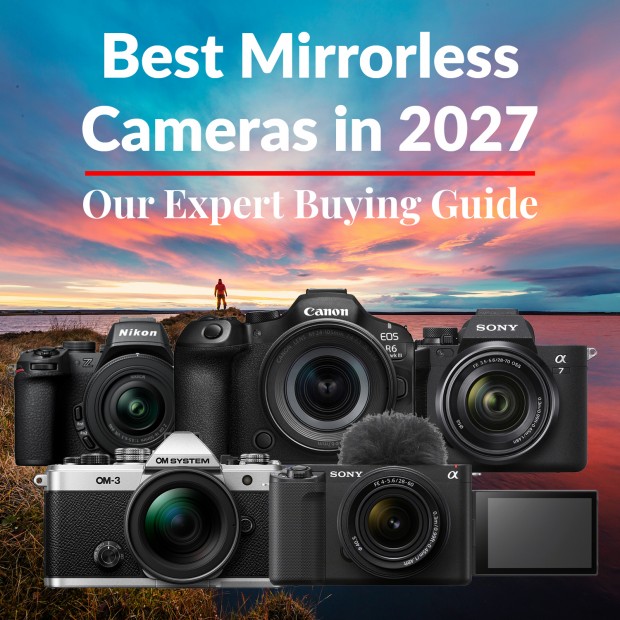
Looking for the best mirrorless camera in 2027? Honestly, you’re spoilt for choice. Today’s mirrorless cameras can spot, recognize and track wildlife in milliseconds, shoot fast enough to freeze a split-second sporting moment, record seriously cinematic video and deliver image quality that would have seemed outrageous even just a few years ago. The tricky part isn’t finding a good camera. It’s finding the right one for the pictures and videos you actually want to make.
At Castle Cameras, we know a camera is so much more than a clinical list of megapixels and frame rates. It has to feel right in your hands, make total sense when you’re out shooting with it, and fit the lenses and accessories you’ll want next. A wildlife photographer, a travel vlogger and someone capturing family life might all need very different things—and none of them should have to pay for features they’ll never use.
This guide brings together 17 mirrorless cameras from Canon, Sony, Nikon, Fujifilm and OM SYSTEM, grouped neatly by the jobs they’re best suited to. Have a look through the comparison table to narrow the field down, then jump to the category that sounds most like you. These are our honest editorial picks based on real use cases, never a paid ranking or a claim that one camera is objectively best for everyone.
At a glance: which mirrorless camera should you choose?
Category
Our shortlist
Why start here
A bulletproof mix of image quality, smart autofocus and everyday versatility.
Lightweight, highly portable bodies that cover holidays, street photography and day-to-day shooting.
Video-friendly features purpose built for vlogging, social content and more ambitious production.
Blazing-fast autofocus and heavy-duty burst shooting, across different sensor formats and budgets.
Hands-on physical dials and controls, striking styling and creative ways to shape your images.
For detail-rich files, deep-cropping flexibility and serious commercial power.
Approachable, user-friendly ways into interchangeable-lens photography that will leave your mobile phone in the dust.
Mirrorless camera comparison table
Specifications are a brilliant starting point, but they don’t tell the whole story. Megapixel counts are approximate effective resolutions, and things like video modes or burst rates can depend on crop, file format, shutter type, firmware and other settings. As ever, feel free to give us a shout or check the full specs before you commit!
Camera
Best for
Sensor
Resolution
Standout / key consideration
All-rounder
Full-frame
33MP
5-axis IBIS; Hybrid stills/video; 4K up to 120p with no crop at 60p. Versatile image quality and lens ecosystem
All-rounder
Full-frame
32.5MP
5-axis IBIS; Up to 7K RAW video; fast burst shooting. High-end hybrid speed and video capabilities.
All-rounder
APS-C / DX
20.9MP
No in-body IBIS; 4K up to 60p with crop; 30fps JPEG burst mode. Compact system with modern subject detection
Travel
APS-C
40.2MP
Up to 7 stops IBIS; 6.2K/30p; 4K/60p. High resolution and Film Simulation controls
Travel
APS-C
24.2MP
No in-body IBIS; Oversampled 4K/30p; 4K/60p with crop. Fast, compact and highly versatile
Creator
APS-C
24.2MP
No in-body IBIS; Video-first design; 4K/60p. Tailored specifically for solo video and content creators
Creator
APS-C
26.1MP
No in-body IBIS; 6.2K/30p open-gate options; 4K/60p. Tiny rig with creator controls and Film Simulations
Creator
Full-frame
12.1MP
5-axis IBIS; 4K/60p, 10-bit recording options. Top low-light video and dedicated vlogging tools
Action / wildlife
Full-frame
24.5MP
Up to 8 stops; 6K/60p internal RAW; 4K/120p. Lightning-fast sensor readout, tracking and video capability
Action / wildlife
APS-C
32.5MP
In-body IS; 4K/60p. Reach-friendly crop sensor with high resolution for distant subjects
Retro / creative
Micro Four Thirds
20.4MP
Up to 7.5 stops IBIS; 4K video. Clever computational photography and rugged IP53 weather sealing
Retro / creative
APS-C
40.2MP
Up to 7 stops; 6.2K/30p; 4K/60p. Photography-led controls and ultra detailed files
Retro / creative
Full-frame
24.5MP
Up to 8 stops; 4K/60p in DX crop mode. Gorgeous vintage styling packed with modern full-frame performance
High resolution
Full-frame
45MP
In-body IS; 8K/60p RAW; up to 30fps stills. Pro-grade resolution paired with blistering speed
High resolution
Full-frame
66.8MP
5-axis IBIS; 8K recording; high-resolution 4K options. Mind-blowing detail and AI driven autofocus
Beginner
APS-C
24.2MP
No in-body IBIS; 4K/30p. Friendly, welcoming controls, dependable autofocus and compact size
Beginner
APS-C
24.2MP
No in-body IBIS; 4K/30p. A reliable, budget-friendly entry point into the E-mount lens lineup
Before you buy: three things that matter more than the spec sheet
1. Sensor size dictates the kit you actually carry
Full-frame setups give you incredible low-light performance and gorgeous, buttery shallow depth of field, but the body is only half the story. APS-C and Micro Four Thirds systems keep your overall bag noticeably lighter and your wallet happier, thanks to more affordable lenses. Honestly? A smaller camera kit that you bring everywhere beats a heavy pro rig left gathering dust on your shelf.
2. Budget for glass, not just a body
Interchangeable-lens cameras are an ecosystem. Pairing a modest body with an exceptional lens will almost always outperform a flagship camera stuck with mediocre glass. Think carefully about what you love shooting: do you need an ultra-wide prime for dramatic landscapes, a versatile standard zoom for family holidays, or a punchy telephoto to capture wildlife?
3. Stabilisation and autofocus solve entirely different problems
In-body image stabilisation (IBIS) is brilliant for keeping handheld shots steady at slow shutter speeds when your subject is completely still. However, it won't magically freeze a sprinting dog or a bird in flight—that takes high shutter speeds and smart autofocus tracking. Likewise, a blazing-fast burst mode is only useful if your lens focus and memory card write speeds can keep up with the action.
The best all-round mirrorless cameras
Sony Alpha 7 V — the adaptable hybrid

The Sony Alpha 7 V remains a firm favourite for photographers who refuse to be pigeonholed into a single genre. Its 33MP full-frame sensor delivers serious detail for landscapes, portraits, and commercial gigs, while snappy autofocus and robust in-body stabilisation make it an effortless daily driver. Because its video capabilities are just as strong as its stills, it’s a brilliant match if your creative output blends both worlds.
- Why it works: A fantastic sweet-spot balance of resolution, handling, and hybrid video, backed by Sony's massive E-mount lens library.
- What to consider: Shooting 4K/120p results in a Super 35 crop, and the full-frame body and lenses might feel like overkill if you're purely looking for a casual shooter.
Canon EOS R6 Mark III — speed with serious hybrid credentials

If you need a high-performance full-frame body that handles high-stakes professional work without breaking a sweat, the Canon EOS R6 Mark III is built for you. The 32.5MP sensor gives you plenty of breathing room for cropping, while lightning-fast continuous shooting and intelligent tracking make short work of fast-moving weddings, sports, and wildlife. Plus, 7K RAW video and open-gate recording give filmmakers ultimate post-production flexibility.
- Why it works: A powerhouse blend of speed, resolution, rock-solid stabilisation, and advanced cinema features.
- What to consider: It's a proper investment piece—you'll want fast memory cards, high-end lenses, and a computer system ready to chew through heavy files.
Nikon Z 50II — an accessible camera with room to grow

The Nikon Z 50II is a fantastic entry point for shooters who want a capable APS-C system that won't leave them wanting an upgrade six months down the line. Packing a 20.9MP sensor, quick EXPEED 7 processing, and clever subject recognition, it handles family life, travel, and pets with ease. It also brings great 4K video tools to the table, including a vari-angle screen and a handy Product Review Mode for creators.
- Why it works: Modern autofocus tech and intuitive controls wrapped in a lightweight, travel-friendly frame.
- What to consider: There’s no in-body image stabilisation, so if you shoot a lot of handheld video or low-light stills, make sure you pair it with stabilised lenses.
The best mirrorless cameras for travel
Fujifilm X-T50 — travel champion with 40.2MP detail

The Fujifilm X-T50 packs serious punch into a compact, gorgeous body, pairing a high-resolution 40.2MP APS-C sensor with up to 7 stops of in-body stabilisation. It's an absolute dream for city breaks, street photography, landscapes, and travel journaling. Best of all, Fujifilm’s legendary Film Simulation dial is right there on top, making it wonderfully easy to dial in stunning, film-like colour profiles straight out of camera without drowning in menus.
- Why it works: Incredible resolving power, dependable stabilization, and iconic retro styling packed into a lightweight travel body.
- What to consider: 40MP files demand more storage space and computing power, and tiny bodies can feel a bit front-heavy if you slap a massive pro zoom on the front.
Canon EOS R10 — quick, capable and ready for a trip

If you want a lightweight setup that leaves your smartphone in the dust without turning photography into a technical chore, the Canon EOS R10 is a brilliant companion. Its 24.2MP APS-C sensor, snappy autofocus, and punchy burst rates make family trips, street walks, and holiday snaps effortless. You also get crisp oversampled 4K/30p video for travel vlogs, with 4K/60p available when you need a tighter crop.
- Why it works: Punchy performance, simple ergonomics, and a very travel-friendly weight.
- What to consider: It lacks built-in image stabilisation, and 4K/60p applies a crop, so pick your lenses accordingly if you love sweeping wide-angle video.
The best mirrorless cameras for content creators
Canon EOS R50 V — video-first and creator-minded

Built from the ground up for video creators rather than treating filmmaking as an afterthought, the Canon EOS R50 V is made to perform. With a sharp APS-C sensor, clean 4K/60p video, intuitive subject-tracking, and dedicated creator controls, it takes the friction out of shooting YouTube content, social videos, and product showcases. Because it's an interchangeable-lens camera, you can start simple and expand your rig as your channel grows.
- Why it works: Purpose-built video workflows and ergonomic tools designed specifically to make solo shooting easier.
- What to consider: It skips the traditional electronic viewfinder and IBIS, so handheld video relies heavily on stabilised lenses or a gimbal.
Fujifilm X-M5 — small camera, big creator energy

The Fujifilm X-M5 is tailor-made for creators who want stellar image quality without lugging around a heavy rig. Weighing in at roughly 355g with a battery and card, its 26.1MP APS-C sensor, built-in Film Simulations, and flexible video specs make daily vlogging and spontaneous street clips an absolute breeze.
- Why it works: Ultra-compact form factor, gorgeous out-of-camera colours, and great mobile-friendly creator tools.
- What to consider: There’s no EVF or built-in stabilisation. If you prefer composing traditional eye-level shots or shooting handheld in the dark, you might want to look at an EVF-equipped stablemate.
Sony ZV-E1 — full-frame video in a compact body

The Sony ZV-E1 is built for serious video creators who demand gorgeous cinematic low-light performance and intelligent automated assistance. By opting for a 12.1MP full-frame sensor instead of cramming in millions of tiny pixels, it prioritises pure video fidelity and incredible dynamic range. Packed with clever features like auto-framing, background defocus, and a directional mic system, it's a dream setup for solo presenters.
- Why it works: Full-frame cinematic video quality paired with class-leading autofocus and smart tracking in a tiny package.
- What to consider: 12.1MP is plenty for web and social, but it leaves you very little room for heavy cropping if you also plan to shoot high-res still photos.
The best mirrorless cameras for action and wildlife
Nikon Z 6III — a wildlife and action powerhouse

The Nikon Z 6III combines a 24.5MP partially stacked full-frame sensor with blazing-fast readout speeds to keep pace with unpredictable subjects. Its rapid burst rates, pre-release capture modes, and up to 8 stops of vibration reduction make it an absolute power-house for sports, wildlife, and fast-moving action in tricky light. On top of that, it's a monster video tool, offering internal 6K/60p RAW and crisp 4K/120p slow motion.
- Why it works: Phenomenal tracking autofocus, robust weather handling, and professional speed across both stills and video.
- What to consider: Full-frame telephoto glass can get heavy and pricey. Make sure you budget for a fast memory card and a solid lens if wildlife is your main game.
Canon EOS R7 — extra reach for birds and sport

If you want professional-grade reach and detail for wildlife and sports without making the financial jump to full-frame gear, the Canon EOS R7 is a standout contender. Its 32.5MP APS-C sensor gives you a tighter field of view multiplier, effectively magnifying distant birds or pitch-side action. Add in-body stabilisation and rapid burst shooting, and you have a brilliant tool for freezing fleeting moments.
- Why it works: High pixel density, great reach advantage from the crop sensor, and rapid-fire shooting speeds.
- What to consider: While the crop brings subjects closer, it doesn't bend optics—you still need quality telephoto glass and proper technique to keep your shutter speeds lightning-fast.
The best retro-inspired mirrorless cameras
OM SYSTEM OM-3 — retro looks, modern computational tricks

The OM SYSTEM OM-3 blends gorgeous vintage aesthetic styling with a portable Micro Four Thirds platform and clever computational photography features. A 20.4MP sensor, stellar 7.5-stop stabilisation, and robust IP53 weather sealing make it an incredible adventure companion for hikers, travellers, and outdoor shooters. Plus, built-in computational modes let you pull off complex long-exposure effects without needing a heavy tripod and screw-on neutral density filters.
- Why it works: Incredibly portable system size, class-leading image stabilisation, and brilliant creative tools built right into the body.
- What to consider: The Micro Four Thirds sensor is smaller than APS-C and full-frame, which limits extreme background blur (bokeh) and ultra-high ISO performance.
Fujifilm X-T5 — photography-first controls and rich detail

The Fujifilm X-T5 is designed for photographers who love the tactile ritual of picture-making. A gorgeous 40.2MP APS-C sensor delivers pin-sharp detail, while traditional physical top-plate dials put shutter speed, ISO, and exposure compensation right at your fingertips. Backed by robust weather sealing and great IBIS, it's a phenomenal machine for landscapes, fine-art portraits, and street wandering.
- Why it works: Uncompromising resolution, weather-sealed durability, and deeply satisfying physical dials.
- What to consider: Those 40MP files fill up hard drives quickly, and the photography-first build means it’s less optimised for heavy video work.
Nikon Zf — full-frame performance with classic character

The Nikon Zf wraps genuine modern full-frame performance inside a gorgeous, classic film-camera aesthetic. Beneath those tactile brass dials sits a 24.5MP full-frame sensor, an EXPEED 7 processor, brilliant subject tracking, and up to 8 stops of image stabilisation. It’s an incredible choice for shooters who want to slow down and enjoy physical controls without sacrificing modern autofocus reliability.
- Why it works: Full-frame quality, gorgeous tactile handling, and modern autofocus wrapped in timeless looks.
- What to consider: The vintage grip design isn't molded for everyone—we always recommend holding one in-store, especially if you plan on mounting larger, heavier zoom lenses.
The best high-resolution mirrorless cameras
Canon EOS R5 Mark II — resolution and speed in one body

The Canon EOS R5 Mark II is built for professionals who need ultra-high-resolution files but refuse to compromise on speed. Its 45MP full-frame sensor pushes up to 30fps continuous shooting, backed by mind-blowing AI-driven autofocus tricks like Action Priority and Eye Control AF. Toss in 8K/60p RAW video capability, and you have a true no-compromise hybrid workhorse.
- Why it works: Massive resolution paired with sports-car speed and cinematic video tools in a rugged professional body.
- What to consider: Huge files demand serious storage architecture, fast CFexpress cards, and high-end glass to truly shine.
Sony Alpha 7R VI — 66.8MP detail for critical work

When absolute, microscopic detail is your top priority, the Sony Alpha 7R VI is tough to beat. Its incredible 66.8MP full-frame sensor is tailor-made for commercial advertising, landscape fine-art, studio work, and archival portraiture where heavy cropping or massive prints are standard. Smart AI subject recognition ensures your focus stays razor-sharp, even when shooting wide open.
- Why it works: Breathtaking resolution, a gorgeous electronic viewfinder, and exceptionally sophisticated autofocus tracking.
- What to consider: 66.8MP files are unforgiving—they demand flawless technique, steady hands, and top-tier lenses to avoid showing up minor optical flaws or camera shake.
The best mirrorless cameras for beginners
Canon EOS R50 — an easy first step beyond a phone

The Canon EOS R50 is a welcoming, approachable entry-point for anyone ready to step up to a proper interchangeable-lens camera. Its 24.2MP APS-C sensor, reliable subject-tracking autofocus, and intuitive guide modes help beginners capture brilliant shots while naturally learning the fundamentals of exposure and composition. It’s also great for family video clips thanks to crisp 4K/30p recording.
- Why it works: Simple, friendly controls, dependable autofocus, and a lightweight kit option that won't overwhelm you.
- What to consider: It lacks in-body image stabilisation, and the compact body features fewer external buttons, meaning more settings live inside the touchscreen menus.
Sony Alpha 6400 — a capable entry-level option

Though an older veteran in the APS-C market, the Sony Alpha 6400 remains a practical, budget-friendly entry point when found at the right price. Its 24.2MP sensor, snappy autofocus, and solid 4K video capabilities give new photographers immediate access to Sony’s vast E-mount ecosystem without needing a professional budget.
- Why it works: Proven image quality, robust build, and open access to one of the largest lens libraries in photography.
- What to consider: It lacks modern AI subject-detection and internal stabilisation features found on newer models. Always check pricing against newer alternatives like the a6700.
Which mirrorless camera is best for you?
There isn’t one universal winner in the search for the best mirrorless cameras in 2027. If you want a versatile camera that can cover paid work and personal projects effortlessly, start with the Sony Alpha 7 V or Canon EOS R6 Mark III. If ultra-portability matters most, compare the Fujifilm X-T50 and Canon EOS R10.
For dedicated video creators, look closely at the Canon EOS R50 V, Fujifilm X-M5 and Sony ZV-E1. Wildlife shooters should compare the Nikon Z 6III and Canon EOS R7 alongside the lenses they plan to use. For detail-led professionals, the Canon EOS R5 Mark II and Sony Alpha 7R VI are the standouts.
Beginners stepping up from a smartphone will find a fantastic home with the Canon EOS R50.
Before you commit, think carefully about the subjects you photograph most, the lenses you’ll need, how the camera grip and buttons feel in your hands and how much editing or storage your workflow can handle. If you’re upgrading from an old legacy DSLR, check whether your existing lenses can be adapted and what functionality you may gain or lose. If you’re switching brands entirely, remember that you’re investing in an ecosystem, not just a camera body.
Find your next camera at Castle Cameras
Still torn between a couple of models? We’re here to help you hash out the real-world differences, pick a lens that suits your shooting style, and build a kit tailored specifically to your budget.
Explore our full range of mirrorless cameras, lenses, and accessories online, or pop in to see us at our Bournemouth or Salisbury stores for friendly, expert advice from people who love photography just as much as you do. No camera can magically guarantee the perfect shot—but having the right kit in your hands makes you an awful lot more ready when the moment arrives.
Frequently asked questions about mirrorless cameras
What is the best mirrorless camera in 2027?
The right choice entirely depends on what you love to photograph. The Sony Alpha 7 V and Canon EOS R6 Mark III lead the pack as brilliant all-rounders; the Fujifilm X-T50 shines as a travel option; the Nikon Z 6III and Canon EOS R7 suit action and wildlife; and the Canon EOS R50 is a fantastic, user-friendly beginner option.
Are mirrorless cameras better than DSLRs?
Mirrorless cameras offer clear electronic viewfinders, advanced modern subject-detection autofocus and generally strong video features in much slimmer, lighter packages. While traditional DSLRs can still produce excellent photographs, they lack a lot of the modern computational tricks and features such as high-speed, silent electronic shutters, subject detection autofocus and in-built sensor stabilisation, making mirrorless the standard choice for future upgrades.
Is full-frame better than APS-C?
Neither is automatically better – they serve different goals. Full-frame sensors offer advantages in extreme low-light and shallow depth-of-field control, while APS-C and Micro Four Thirds kits are significantly smaller, lighter and more affordable. Lens selection and photographic technique matter far more than sensor size alone.
How many megapixels do I actually need?
For everyday photography, family shooting and sharing online, 20 to 26MP is more than enough for most people. Stepping up to around 33 to 40MP gives extra cropping freedom and pin-sharp detailed prints, while 45 to 61MP is ideal for high-end commercial work, landscapes and huge printed displays – although it comes with heavy demands on your computer’s hard-drive.
What should I budget for after buying a camera?
Always leave room in your budget for at least one suitable lens, memory cards, a spare battery, a protective bag or case, and a way to back up your images. Depending on your subject, you may also want a sturdy tripod, a speedlight flash, an external microphone or telephoto zoom lens. Remember: A great lens has a much bigger impact on your final images than minor spec bumps in camera-body specifications.
-
Posted by Graham Fry
30th October 2026